Fermented Honey Garlic
Enjoy as a seasoning, or in your home spun remedies for colds, cough, and immune boosting properties. Do not give raw honey to babies under 1 years old. Raw honey may contain botulism spores.
Ingredients
Method
- Cover garlic cloves in honey, making sure there is enough to cover the cloves. Let the lid lay loosley on top. (give or take 1/3 garlic to 3/4 honey)
- Daily, Tighten the jar lid and turn the jar upside down so that the cloves are covered in honey. Once they are covered, turn the jar back over and make sure you untight the lid.
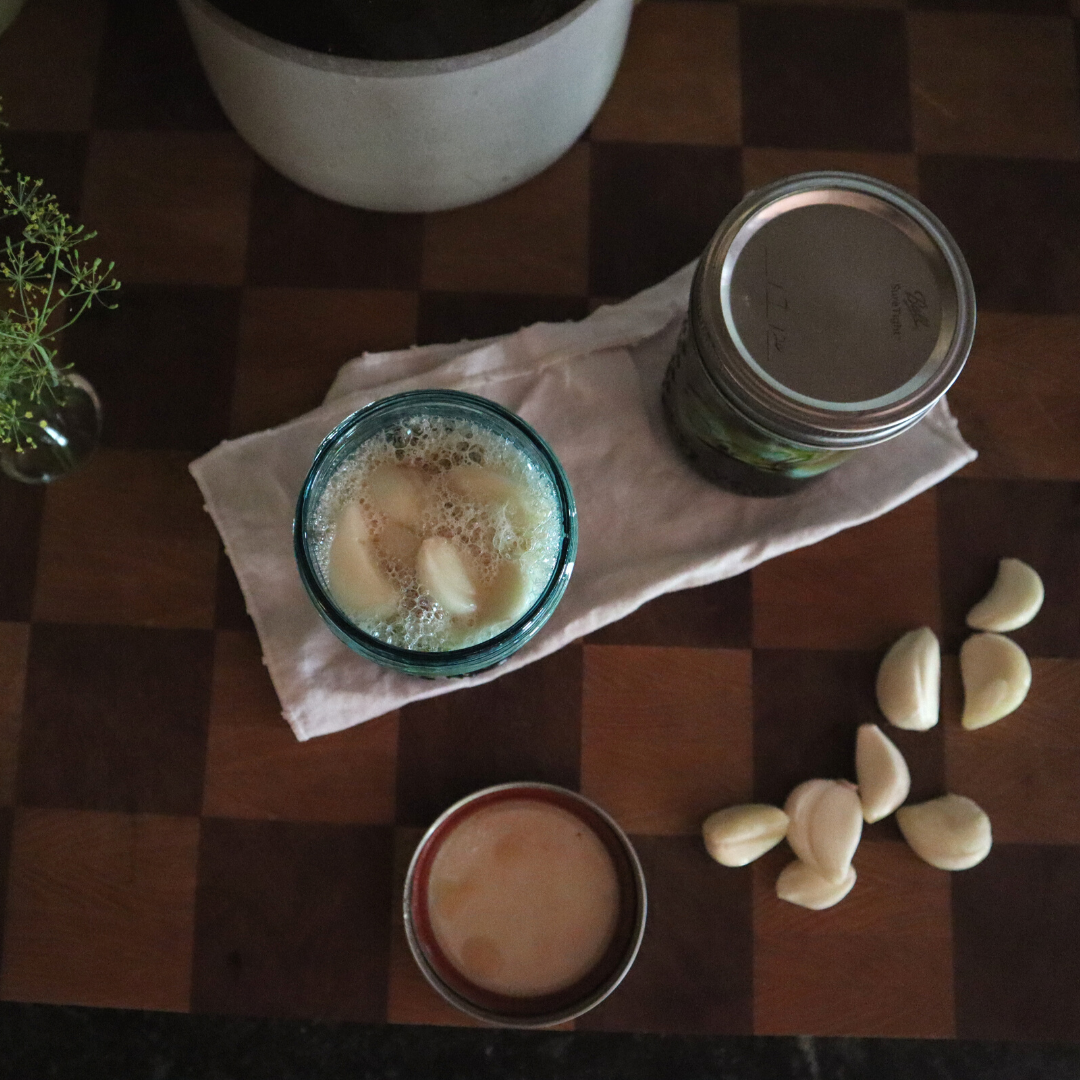
- After several days, you will start to see the results of fermentation. The honey will begin to bubble. This is a result of the fermentation process!
- After 3-4 weeks, you have fermented garlic honey! Garlic can remain in the honey but may turn blue or green. Nothing weird, just a chemical reaction from the fermentation process.
- Store at room temperature, out of direct light.
- As garlic ferments, bubbles will want to escape the lid and honey may overspill.
Notes
Fermenting is a traditional way of putting up food without spoilage. It’s a fascinating metabolic process in which organic matter and enzymes work together to preserve food. Ferments are ALIVE with beneficial bacteria and bioavailable nutrients. They help with digestion and seeding the gut with the friendly, immune fighting bugs we lack in modern day diets.
Directions: Use this fermented garlic honey in marinades or sauces. You can also use them in a hot tea to soothe a sore throat, or enjoy crunching on a clove to boost your immune system. For coughs or sore throat, add honey garlic to apple cider vinegar and water and gargle for a sore throat, or take a tablespoon or two for cough.
Check out my Garlic Salve post – for colds, flus, and coughs.